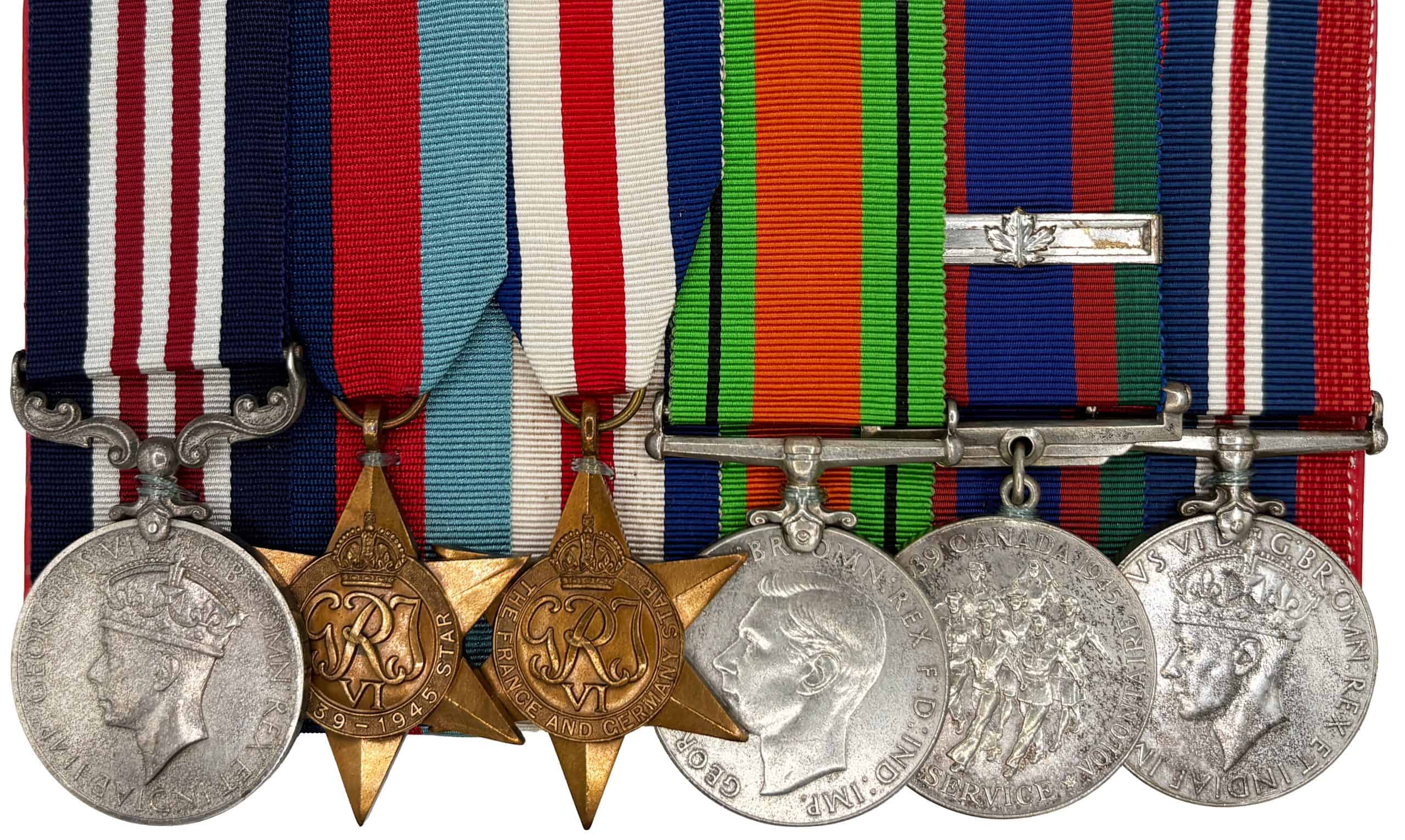
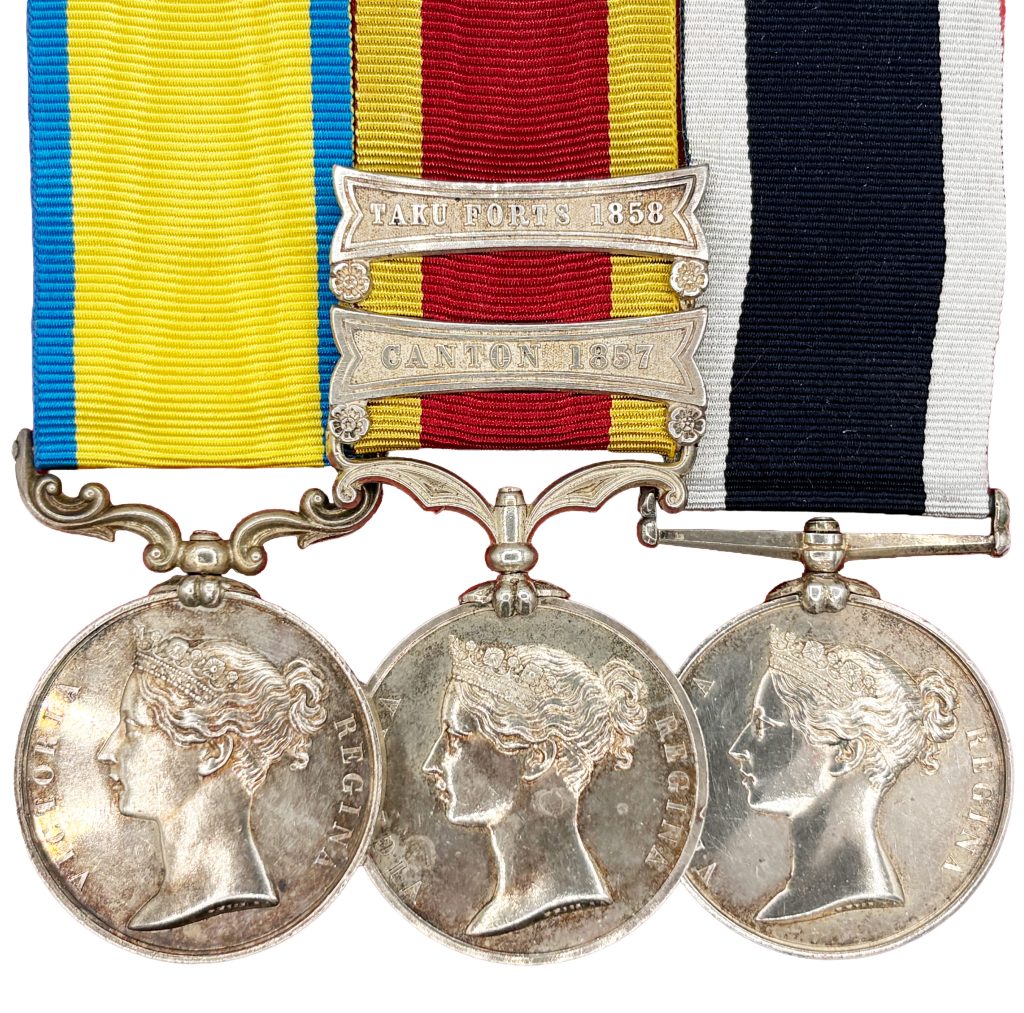
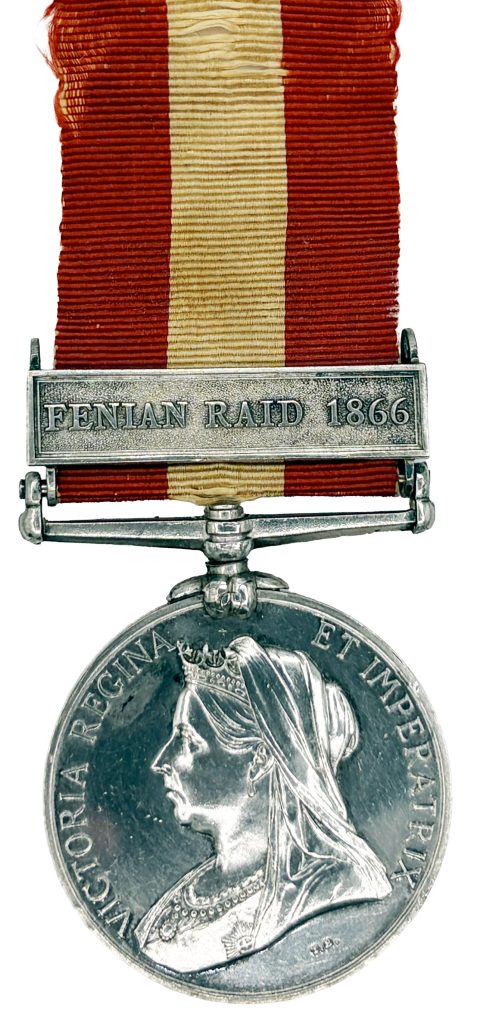
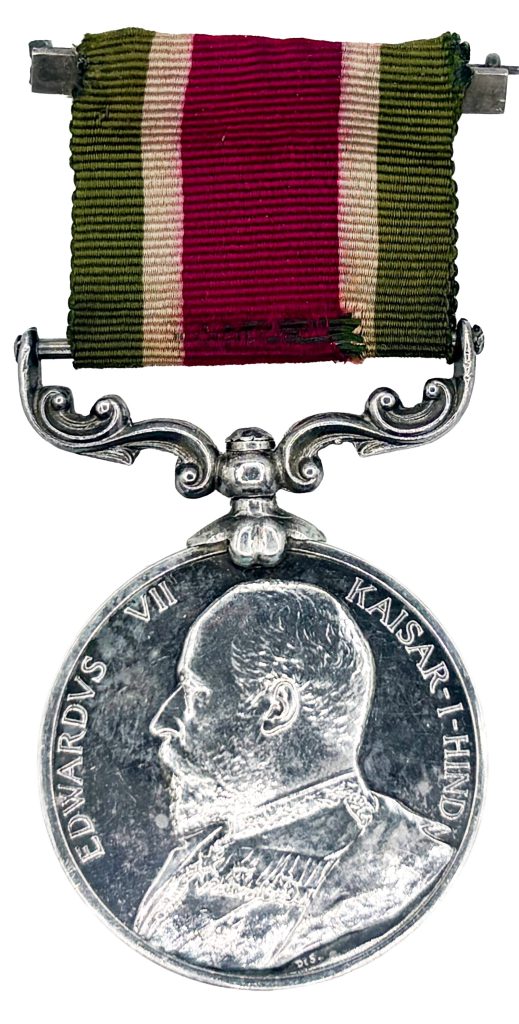
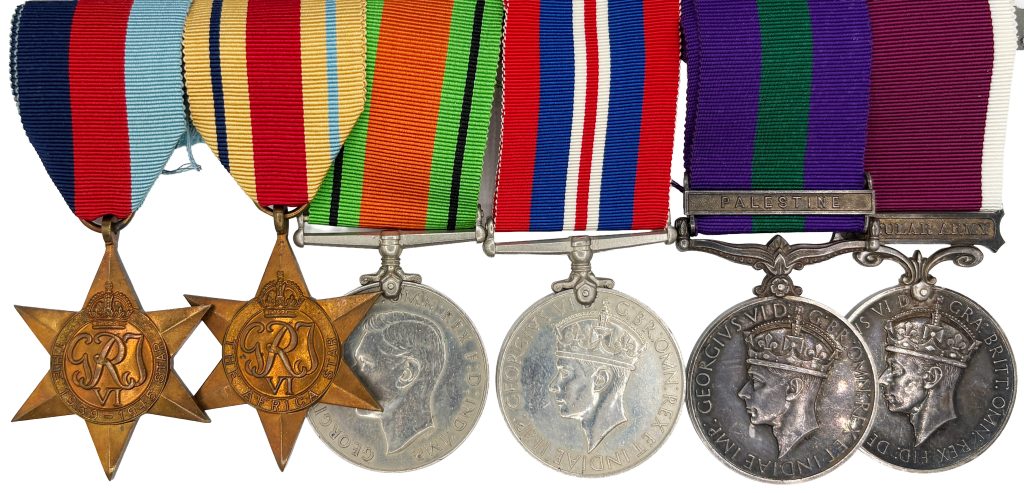
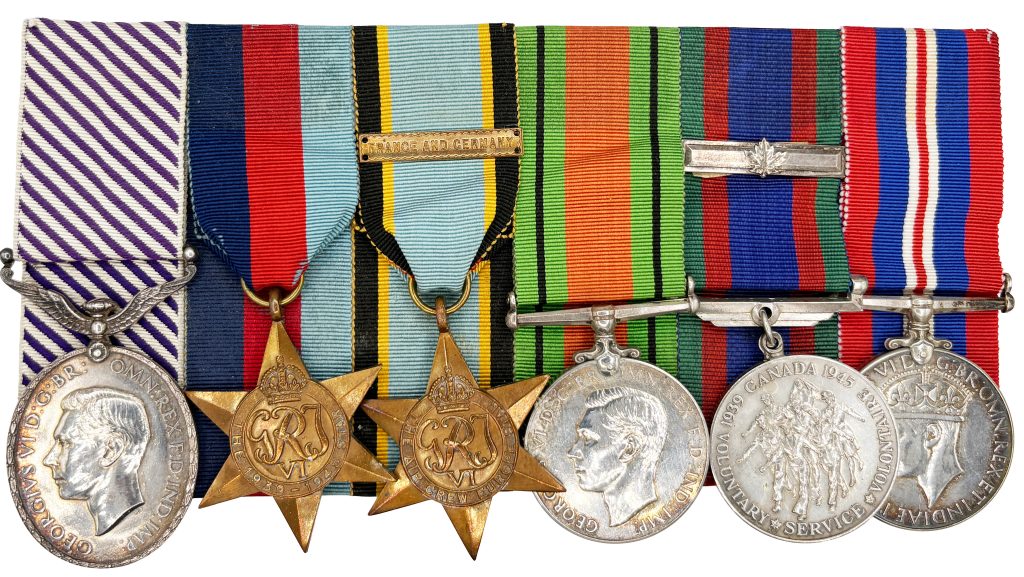
A Second War ‘North-West Europe campaign’ M.M. group of six awarded to Lance-Corporal O. T. Camphaug, Canadian Provost Corps, who, among other feats, displayed great gallantry under fire on Nijmegen Bridge.
Military Medal, G.VI.R. officially named to: L. 12647 L/Cpl. O. T. Camphaug. C. Pro. C.
1939-45 Star; France and Germany Star; Defence Medal, Canadian issue in silver; Canadian Volunteer Service Medal, with overseas clasp; War Medal 1939-45, Canadian issue in silver, mounted for wear, generally very fine.
Provenance
Ron Penhall Collection, Dix Noonan Webb, September 2006 One of 10 M.Ms awarded to the Canadian Provost Corps in the 1939-45 War.
M.M. London Gazette 11 October 1945:
‘In recognition of gallant and distinguished services in North-West Europe.’
The original recommendation states: ‘At the time his unit was stationed in the vicinity of Nijmegen, Holland, personnel of this Company were on duty on the bridges, which were a target area for heavy shelling by German batteries. In the face of constant shellfire, this N.C.O. remained at his post over a long period of time and, on numerous occasions, calmy directed traffic, removed vehicles which were obstructing traffic and by his example of grim determination and coolness under fire, enabled convoys to proceed through the target area.
On 1 March 1945, this N.C.O. was stationed at Cleve, Germany. On this date the central area of the town and especially the area of Company H.Q., came under heavy shellfire. A large number of vehicles were concentrated in a central square, near a water point. Several vehicles were hit by shrapnel, and one, after receiving a direct hit, burst into flames. Lance-Corporal Camphaug uncoupled the water trailer, entered the vehicle which was burning fiercely and moved it out of the square, abandoning it at the entrance to an alleyway where it did not endanger the remaining vehicles. Despite heavy shelling of the square, this N.C.O. removed the immediate threat to remaining vehicles and personnel in the vicinity.
During the months this N.C.O. has served in the European theatre, his conduct in the face of enemy action has been an inspiration to his comrades. His complete disregard for personal safety, and his coolness under shellfire on several occasions, enabled convoys transporting vital supplies to the forward troops to proceed through the target area with a minimum loss of vehicles and time.’
Orville Theodor Camphaug was born at Battrum, Saskatchewan in December 1916 and enlisted in the Canadian Army in April 1940, initially being posted to the 1st Battalion, South Saskatchewan Regiment. Arriving in the U.K. in that December, he subsequently transferred to the Canadian Provost Corps and was embarked for North-West Europe in July 1944, initially with an appointment in the 12th Battalion, but from October of the same year in the 13th Battalion. As verified by the above recommendation, he subsequently witnessed extensive action, not least at Nijmegen – presumably not that long after the capture of the bridge during the Arnhem operations – and at Cleve in Germany in the following year. He was finally repatriated to Canada in December 1945, where he was discharged at Regina, Saskatchewan in February of the following year. In August 1950, however, and no doubt as a result of the outbreak of hostilities in Korea, he re-enlisted in the Canadian Army Special Force, but he never went overseas and was discharged on medical grounds at the end of the same year. Camphaug died in British Columbia in June 1992.