BEM NEWTON

BEM NEWTON

$3,600.00

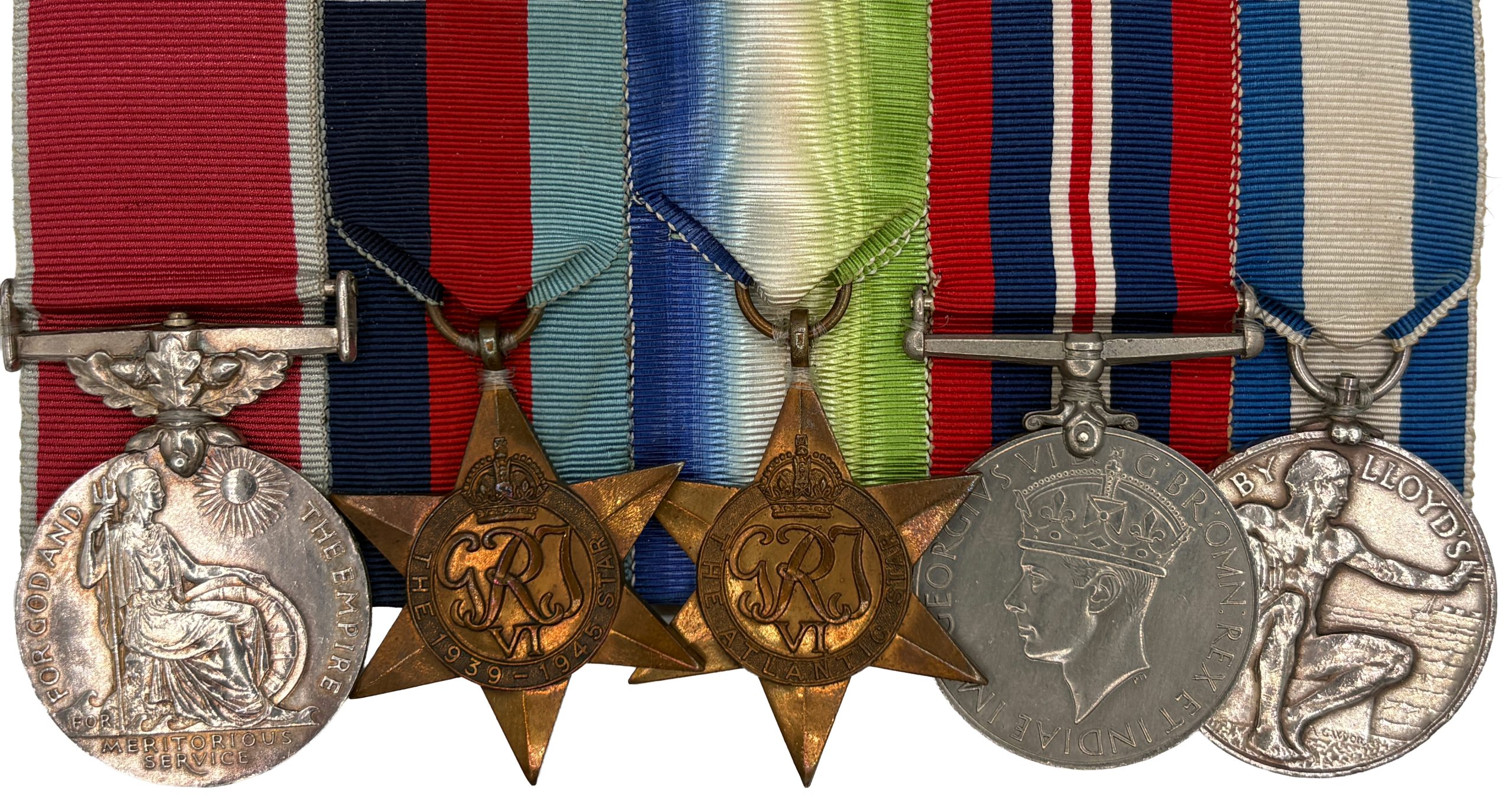
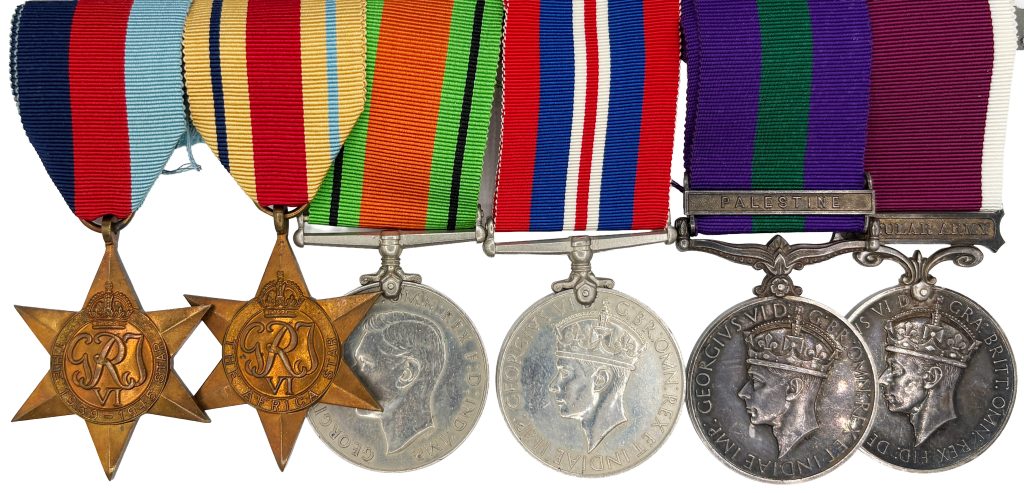
A Second War B.E.M. and Lloyd’s War Medal for Bravery at Sea group of five awarded to Second Steward G. R. Newton, Merchant Navy, who gave up his place in a dingy to assist two wounded men, despite the constant and great risk of shark and barracuda attack.

British Empire Medal, (Civil) G.VI.R., 1st issue,Second Steward G. R. Newton, S.S. “Corabella”, 30th April 1943.

1939-45 Star; Atlantic Star; War Medal 1939-45.

Lloyd’s War Medal for Bravery at Sea, Second Steward G. R. Newton, S.S. “Corabella”, 30th April 1943.

The first with re-engraved naming, nearly very fine.
B.E.M. London Gazette 7 December 1943.

Lloyd’s War Medal for Bravery at Sea Lloyd’s List & Shipping Gazette 7 November 1944. The joint citation states:
‘The ship, sailing in convoy, was torpedoed and sank within 10 minutes. Third Radio Officer Byatt and Second Steward Newton acted with great bravery and self-sacrifice after the ship was abandoned. In order that two severely injured comrades might be made more comfortable, they gave up their places in the rubber dingy and swam alongside, keeping the sharks and barracuda away from the boat.’
George Ronald Newton, who was born on 3 September 1921, was serving as Second Steward aboard the cargo tramp S.S. Corabella when she was torpedoed by the U-515 while sailing in Convoy TS. 37, 90 miles south of Freetown, on 30 April 1943. The U-boat, commanded by Kapitain Werner Henke, accounted for no less than seven merchantmen from the same convoy in 48 hours. Henke, a holder of the Knight’s Cross with Oak Leaves, was later captured, and was shot dead while trying to escape from an American P.O.W. camp in June 1944.
In his subsequent report on the loss of the Corabella, the ship’s Master cited the bravery of Newton in the following terms:
‘The Third Radio Officer, Donkeyman, Cook and Second Steward [Newton] were also on some wreckage when they were sighted by an R.A.F. aircraft, which dropped a rubber dinghy to them. The Third Radio Officer and Second Steward swam and secured the dinghy, then placed the two injured men in it, giving up their own places so that the two injured ones might have additional comfort. The Third Radio Officer Stuart Byatt and Second Steward George Newton then took it in turns to swim and splash around the dinghy to keep sharks and barracuda clear … in spite of the great and constant risk of being attacked. They were ultimately picked up during the early morning of 2 May, and taken to Freetown, where the two injured men were taken to hospital.’
Byatt and Newton received the M.B.E. and B.E.M. respectively, in addition to the Lloyd’s War Medal for Bravery at Sea. Two other crew members received a Commendation.
Interestingly, and perhaps not surprisingly, Newton was discharged in May 1945, suffering from ‘war neurosis’, having in the interim served on the Cunard White Star Line’s Queen Mary from December 1943 to October 1944, a period that witnessed her crossing the Atlantic as a troopship on several occasions. He died in Cleveland, Yorkshire in August 1993.

EM4645

1 in stock

Secure Payment
Processing

Free
Global Shipping

Expert Valuation
& Purchasing

Other Products